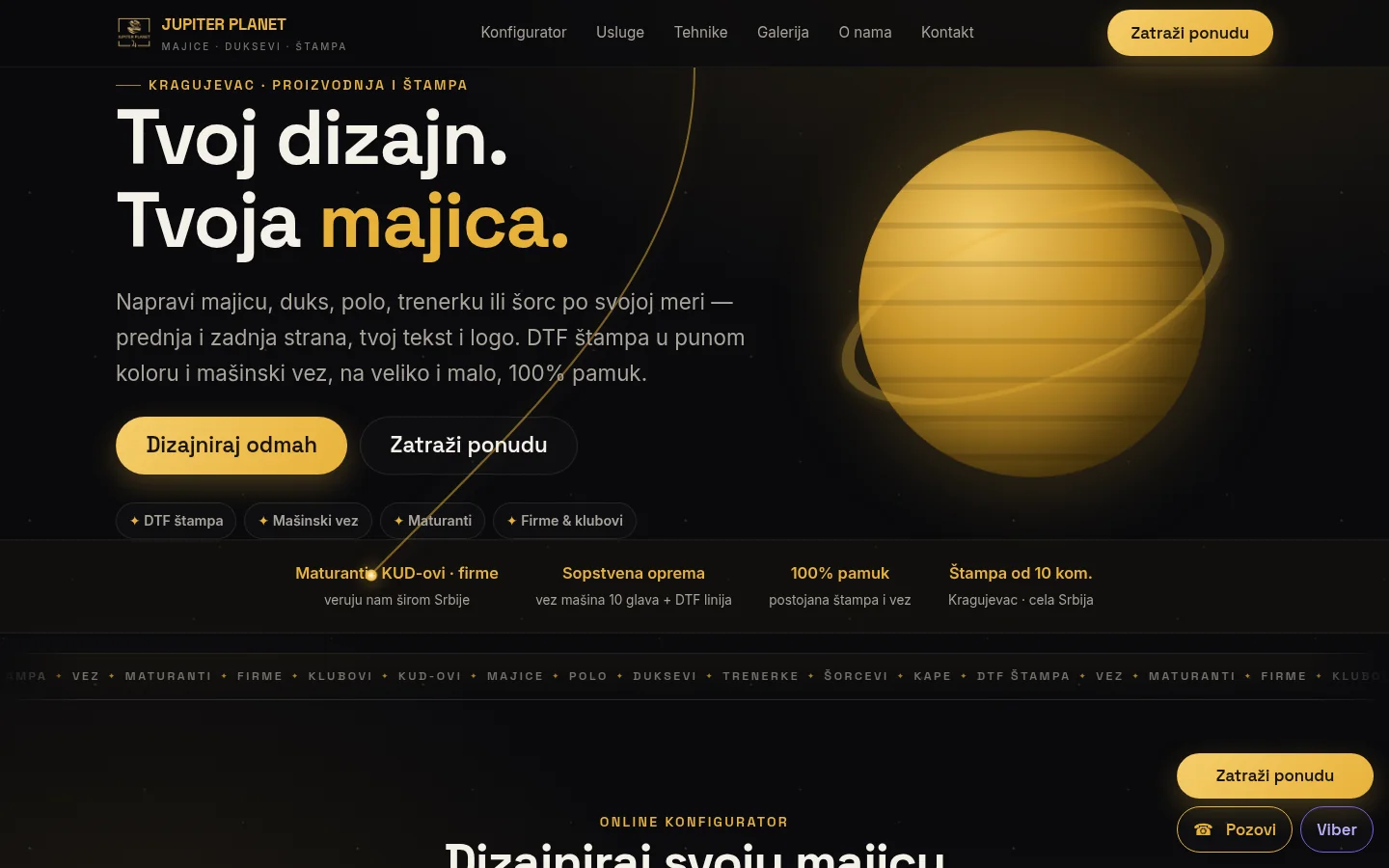
A catalogue starts the conversation
A business buyer first chooses a product type and model. A product page therefore continues beyond an image: it explains purpose, available variants and the route to a quote. A public fixed price is not required when quantity, material and finishing affect the final calculation.
The configurator preserves buyer decisions
The configurator connects a product with colour, print position, technique and approximate quantity. The enquiry carries those choices instead of arriving without context, giving sales a concrete list to confirm.
- Product model and variant
- Decoration type and position
- Quantity and buyer note
Content for two audiences
The website serves procurement teams that know an exact item and buyers still comparing possibilities. Categories narrow the range quickly, while deeper pages explain print, material and purpose without overloading product cards.
Technical foundation
The project uses PHP, a data-led catalogue and an administrative content workflow. Clean routes, structured data, a sitemap and responsive images keep the content readable before motion and without depending on third-party scripts.
The boundary of this case study
This page documents the selection and enquiry architecture of a publicly presented project. It does not publish business prices, customer records or outcomes that are not publicly verified. The detailed Serbian case study on the main portfolio remains the source for broader context.